 North Carolina Criminal Law Updates



A DUI arrest while visiting North Carolina creates immediate legal problems that don’t disappear when your trip ends. Whether you were stopped after dinner in Duck or pulled over near your 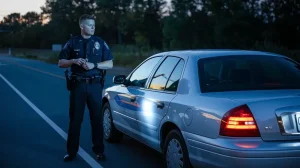 rental house in Kill Devil Hills, you’re now facing a criminal charge that could very well follow you home.
North Carolina has some pretty harsh impaired driving laws. Make no mistake, a DWI is not a minor ticket. It’s a criminal offense that can lead to license revocation, insurance consequences, and possible jail time in some circumstances.
For out-of-state visitors to the Outer Banks, DUI charges also raise practical questions:
- Do you have to return for court?
- Will North Carolina report the charge to your home state?
- Can a lawyer appear on your behalf?
If you’ve been charged, you need accurate information and a clear plan, not fear, supposition, guesswork, or delay.
If you’re facing DWI charges on the Outer Banks, know this: The NC DWI laws are not necessarily the same as where you live and they’re not always entirely fair.
North Carolina’s DUI Law Applies to Everyone, Vacationers Included
North Carolina General Statute § 20‑138.1 makes it a crime to drive while impaired by alcohol, a controlled substance, or any other impairing substance for that matter.
There is no separate law for tourists. You are subject to the same rules as a local resident.
The legal limit in North Carolina is a 0.08 blood alcohol concentration (BAC), but you can also be convicted without a specific BAC if the State proves that you were “appreciably impaired” based on your driving and behavior.
Arrests are common near OBX restaurants, bars, and beach roadways, especially during summer months and holidays.
Law enforcement uses roadside field sobriety tests, breath testing devices, and in some cases, blood draws to make their DWI case.
If you refused testing, you could be dealing with what’s called a “willful refusal,” which carries its own consequences under North Carolina’s implied consent law.
Implied Consent and Refusal: What Happens If You Said No?
North Carolina’s implied consent law essentially requires drivers to submit to chemical testing, typically breath or blood, if an officer has probable cause (reasonable grounds) to believe you were driving while impaired.
Refusing to submit to testing can result in a 12-month civil revocation of your driver’s license in North Carolina even before your criminal case is resolved.
A willful refusal may complicate your defense.
While refusal is not a criminal offense in North Carolina (unlike some other states), the fact that you were given an opportunity and refused to provide a breath or blood sample can be used as evidence against you in court.
DWI defense lawyers may refer to that as a negative inference.
The argument goes like this: We gave the defendant the chance to provide a sample, proving the BAC. They know they’d blow over (or a blood draw would show a BAC of .08 or higher) and that’s why they refused. They knew they were guilty.
If you’re from out of state, the North Carolina DMV may notify your home state licensing authority, and you could face consequences there as well, depending on how your state reciprocates DWI convictions and refusals.
If you did submit to testing, and the BAC result was 0.08 or higher, you are likely facing an automatic license revocation, which can begin even before your case is heard.
This revocation is civil in nature and separate from the criminal charges.
Do You Have to Come Back to North Carolina for Court?
This is one of the most common concerns for vacationers charged with DWI.
An OBX criminal defense attorney may be able to appear in court on your behalf for initial appearances and administrative court, but whether the disposition of your case involves a guilty plea or trial, your presence will likely be required.
Simply, you’re probably coming back to North Carolina.
That applies not just to misdemeanor DWI charges but also other criminal charges like simple possession, simple assault or assault and battery, and serious felony allegations like Felony Death by Vehicle, Felony Assault by Vehicle and Misdemeanor Death by Vehicle charges.
Court appearances in DWI cases are held in the county where the arrest occurred and what people know as the “Outer Banks” are actually comprised of several different and distinct judicial districts.
DUI, DWI, and “Drunk Driving” in North Carolina
| Common Term | What It Means Under North Carolina Law |
|---|---|
| DUI | A common public term for impaired driving. North Carolina does not use DUI as a statutory charge. The offense is legally titled “impaired driving.” |
| DWI | Another shorthand term used by lawyers, police, and the public. Like DUI, it describes the same offense formally charged as impaired driving under N.C.G.S. § 20-138.1. |
| Drunk Driving | A conversational phrase referring to alcohol-based impaired driving. North Carolina law charges alcohol impairment under the same impaired driving statute that also covers drugs and other impairing substances. |
| Impaired Driving | The actual legal charge in North Carolina under N.C.G.S. § 20-138.1, covering alcohol, drugs, or any other impairing substance. |
Where Will Your DWI Case Be Heard in the Outer Banks?
If you were arrested in Dare County, your DWI case will be scheduled in the Dare County District Court, located in Manteo, North Carolina. That courthouse handles cases from towns and areas like Nags Head, Kill Devil Hills, Kitty Hawk, Southern Shores, Roanoke Island, and Buxton on Hatteras Island. Dare County is part of Judicial District 1, which covers much of northeastern North Carolina.
Other arrests along the Outer Banks may fall into adjacent counties.
If you were stopped in Corolla or Carova, for example, your case is likely in Currituck County, with court held in Currituck Courthouse in Currituck, NC. That courthouse also handles charges from mainland areas like Moyock and Knotts Island.
If your arrest occurred farther inland, which locals sometimes refer to as the “inner banks,” such as in Camden County or Pasquotank County (home to Elizabeth City) your case will be heard in those respective county district courts. These too are part of Judicial District 1. In Perquimans County, court is held in Hertford, NC, and in Gates County, court convenes in Gatesville.
Each judicial district maintains its own calendar and courtroom schedule.
Some counties hold DWI court on specific days of the week. Others rotate dockets, and many have limited in-person sessions depending on courthouse staffing and local policy.
Regardless of where the arrest occurred, your first court date will appear on your release paperwork or citation, and attendance is mandatory unless your appearance waived and handled by your attorney.
Failing to appear without legal representation or a valid excuse can result in the issuance of an Order for Arrest (OFA).
That can ultimately lead to additional charges (if you purposely ignore the charges), forfeiture of any bond posted, and long-term problems with license reinstatement and case resolution.
If you live outside North Carolina or out of state entirely, do not ignore your court obligations.
It is possible, depending on the facts of your case and the county where it’s being prosecuted, for your lawyer to appear in court on your behalf and manage certain aspects of the case without requiring you to return in person.
But this must be arranged in advance, and in accordance with both local procedures and rules.
Again, if you fail to appear without proper legal arrangements, a warrant may be issued for your arrest.
Don’t assume you can skip court until you’ve spoken with an OBX lawyer who regularly practices in the county where you were arrested.
Will a DWI in North Carolina Affect Your License Back Home?
Yes, it can. Even if you’re licensed in another state, a North Carolina DWI conviction or refusal can affect your ability to drive, both in North Carolina and in your home state.
North Carolina is a member of the Interstate Driver License Compact, an agreement among states to share information about traffic violations and suspensions.
This means your home state may take reciprocal action based on the outcome of your North Carolina case.
If your license is revoked in North Carolina, your state’s DMV could also suspend or revoke your license, even if you were never pulled over there.
Likewise, a DWI conviction could appear on your driving record, affect your insurance rates, and potentially interfere with employment or travel, depending on your situation.
Can You Get the DWI Dismissed or Reduced?
Every DWI case in North Carolina depends on the specific facts, the strength of the State’s evidence, and the legal issues raised by the defense.
In some cases, it may be possible to challenge the stop, the arrest process, the administration of field sobriety tests, or chemical testing procedures.
Motions to suppress or exclude evidence can significantly affect how the case proceeds.
North Carolina law does not allow for a plea to a lesser-included offense like “wet reckless,” which is recognized in some other states.
Reckless driving is not a lesser-included offense of impaired driving in North Carolina. Prosecutors may, under certain circumstances, choose to dismiss a DWI charge and accept a plea to another offense, but only if there is an independent factual basis to support that charge. These decisions are case-specific and subject to ethical and legal constraints on plea bargaining.
Attorney Danny Glover Jr has more than 25 years of experience navigating local courtroom procedures across the Outer Banks and northeastern North Carolina. He can assess whether your case presents legal grounds for dismissal, or whether a resolution outside of a DWI conviction is realistically available based on the facts and law.
What happens if you’re convicted of DUI in North Carolina?
A conviction for DWI in North Carolina carries sentencing governed by statute.
Sentences are determined based on a system of levels, ranging from Level 5 (the least severe) to Level A1 (the most severe misdemeanor DUI charge in NC). This structure applies uniformly across the state, whether you’re a resident or a visitor.
Your sentencing level is determined by the presence or absence of three types of statutory factors:
- Grossly aggravating factors (such as a prior DWI conviction within seven years, driving with a revoked license due to DWI, causing serious injury, or having a child under 18 in the vehicle)
- Aggravating factors (including a high BAC of 0.15 or greater, especially reckless driving, or driving with a revoked license not related to DWI)
- Mitigating factors (such as a clean driving record, voluntary submission to treatment, or a BAC barely over the legal limit – BAC of .08 or .09)
If one or more grossly aggravating factors are present, the sentence will be at Level 1, Level 2, or Level A1, depending on how many of those factors apply. For example:
- Level A1 is the most serious and applies when three or more grossly aggravating factors are present. It carries a mandatory minimum of 120 days in jail and up to 36 months, with no option to suspend below the minimum.
- Level 1 and Level 2 sentences also involve mandatory jail time, though the court may permit alternatives like inpatient treatment or electronic alcohol monitoring (CAM – Continuous Alcohol Monitoring) against portions of the special term “split sentence” under certain circumstances.
- If no grossly aggravating factors are found, the court will weigh the aggravating and mitigating factors to determine whether to impose Level 3, 4, or 5 sentencing. These levels may carry probation, fines, community service, substance abuse treatment, and in some cases, can still include short jail sentences.
All DWI convictions in North Carolina come with mandatory license revocation, and depending on the sentencing level and prior history, you may also face substance abuse assessment and treatment requirements, ignition interlock restrictions, or limitations on when and where you’re allowed to drive.
This is not a flexible or informal process.
North Carolina’s sentencing law for impaired driving is formulaic, detailed, and strictly applied.
The presence or absence of specific factors, not emotion, intent, or apology, determines how punishment is structured.
If you’re facing sentencing after a DWI conviction on the Outer Banks, you need clear advice on what factors apply to your case and what the possible range of outcomes will be.
Frequently Asked Questions About DUI/DWI Charges on the Outer Banks
Is there a difference between DUI and DWI charges in North Carolina on the Outer Banks?
DUI and DWI are commonly used shorthand terms, but under North Carolina law there is no distinction between them because the actual offense is “impaired driving” under N.C.G.S. § 20-138.1, and both acronyms are simply informal labels used to generally describe the same criminal charge on the Outer Banks and across the state.
Do I have to come back to North Carolina for court if I got a DWI on vacation?
A DUI while on vacation in North Carolina usually requires a return court appearance because final dispositions, whether by plea or trial, generally require the defendant to be present even if an attorney can cover early administrative settings.
Will a North Carolina DWI affect my driver’s license back home?
A DWI on vacation in North Carolina can affect your home-state license because North Carolina often reports convictions and license revocations through the Interstate Driver License Compact, which allows other states to impose reciprocal suspensions or other penalties.
Can my lawyer go to court for me after an Outer Banks DWI arrest?
An Outer Banks DWI attorney may appear on your behalf for initial appearances and certain administrative court dates, but personal attendance is typically required to resolve the case through a guilty plea or to proceed to trial.
What happens if I refused a breath or blood test after a DWI on vacation in North Carolina?
Refusing chemical testing after a DWI on vacation in North Carolina triggers an immediate one-year civil revocation in North Carolina. Your home state, if it receives notice of the Willful Refusal, may take its own administrative action regarding your driving privilege. Prosecutors in North Carolina, regarding the related DUI charge, may introduce the willful refusal as evidence in the criminal case.
Can an Outer Banks DWI charge be dismissed or reduced?
An Outer Banks DWI charge may be challenged and occasionally dismissed or resolved without a DWI conviction when legal defects exist in the traffic stop, arrest procedures, field sobriety testing, or chemical testing process. Each case is different and therefore deserves the attention of an experienced OBX DUI lawyer to discuss the specifics of your legal matter. North Carolina does not permit automatic reductions to lesser offenses such as “wet reckless” or “reckless driving.” North Carolina also does not offer deferrals or “deferred prosecution” for impaired driving.
Is “drunk driving” different from “impaired driving” in North Carolina?
“Drunk driving” is a common conversational term, but the legal offense in North Carolina is called “impaired driving” under N.C.G.S. § 20-138.1, and that charge applies to alcohol, drugs, or any other impairing substance, even when the driver is not legally intoxicated or “drunk” by alcohol.
Why Hiring a Local OBX Lawyer Matters
Even though the DWI laws are the same across the state, each county has its own courtroom procedures, judges, prosecutors, and local expectations.
In smaller jurisdictions like Dare and Currituck, court may only be held on certain days of the week.
Some matters must be handled in person. Others can be waived for certain procedural or administrative hearings.
You deserve a lawyer who knows the system and can give you clear advice about how to resolve your case without making unnecessary trips back to North Carolina.
Whether your case involves a refusal, a high BAC, or a straightforward stop after dinner at the beach, you’re facing a serious criminal allegation.
You may not know what to do next, but doing nothing can result in worse consequences than the original charge.
Call the Glover Law Firm for Help With an OBX DUI
If you were arrested for DWI while visiting North Carolina on the Outer Banks, don’t wait to get legal advice.
Your case needs attention.
The Glover Law Firm has substantial experience helping out-of-state visitors navigate DWI charges on the Outer Banks. For a confidential consultation, TEXT or call 252-299-5300 today or find us on Google Maps.